01
The Operational Breakdown
- 01
Chaotic Phone-Based Dispatch: Route priorities and reassigned stops are phoned in individually. Instructions are never written down, leaving operations with no paper trail when delivery SLAs fail.
- 02
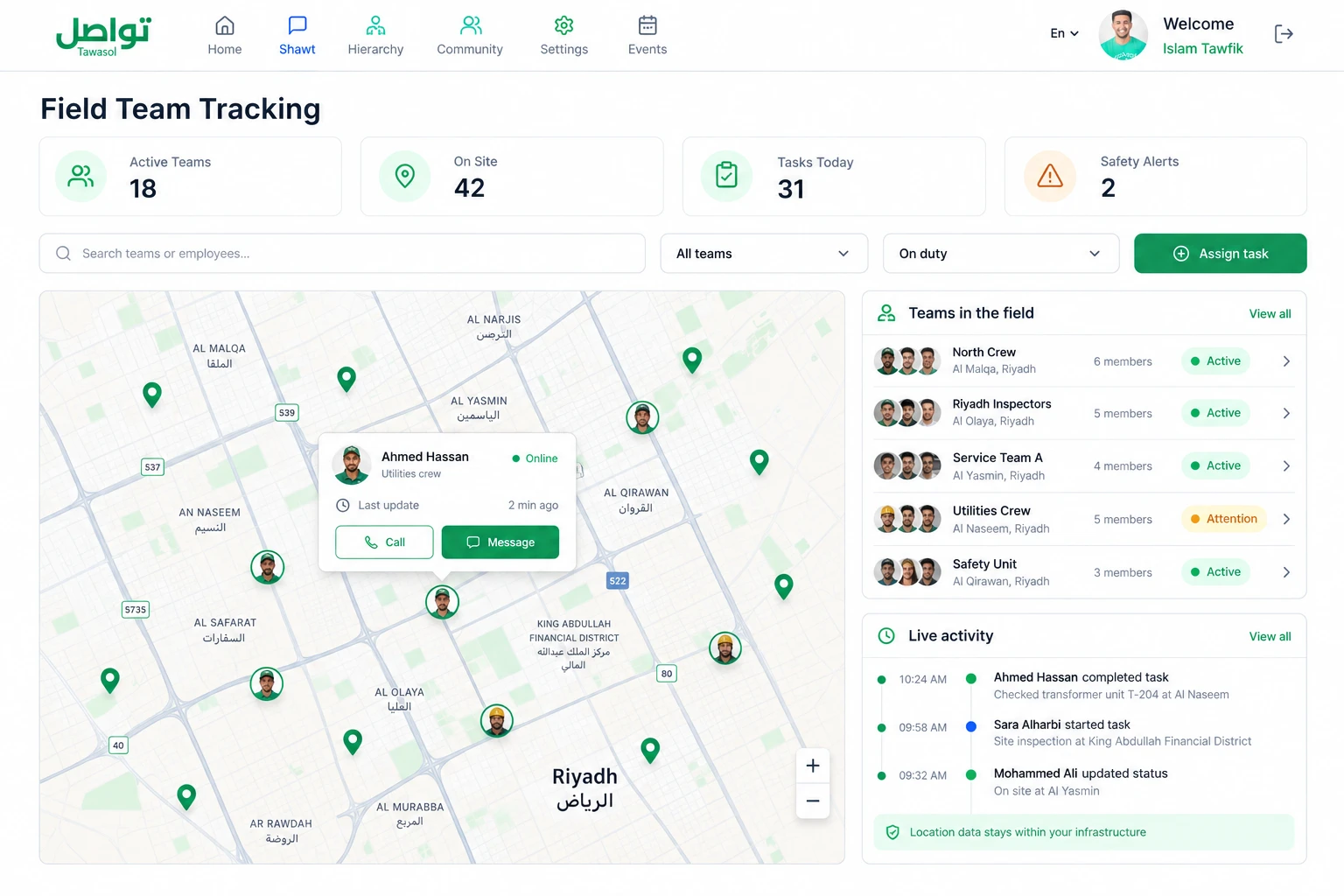
Zero Route Visibility: Dispatch managers have no live view of driver distribution, stop progress, or delivery delays until the shift ends.
- 03
Exceptions Surface Too Late: Road closures, gate access issues, or damaged parcels are reported to central office only after the consignee calls to complain.
- 04
Fleets Run on Personal Numbers: Drivers coordinate inside private chat groups that the logistics company does not control, taking customer data and delivery histories with them when they leave.
02
How Tawasol Solves It
Scroll the table to read all columns
| Operational Problem | What Tawasol Does | The Functional Result |
|---|
| Phone-Based Dispatch | The Tracking module pushes tasks directly to drivers' handsets, while Shawts distribute route and weather updates across entire operating zones. | Drivers pull out of the depot with written, timestamped manifests directly on their mobile screens. |
|---|
| Zero Route Visibility | Live driver positioning rendered across an interactive map, paired with real-time task progression indicators. | Operations monitors fleet velocity and job completion as it happens throughout the shift. |
|---|
| Late Exception Reporting | Drivers submit geo-located incident reports with high-resolution photos directly from the road. | Central customer service identifies delivery bottlenecks before the consignee ever calls. |
|---|
| Personal Chat Groups | Controlled depot, zone, and fleet channels provisioned inside the enterprise's private app. | Operational intelligence and delivery proofs remain permanently secured inside company systems. |
|---|
03
Case Studies in Practice
01↗
Scenario A: Peak-Morning Route Priority Adjustment
- The Role
- Fleet Dispatch Supervisor.
- The Situation
- Morning load-out across the northern industrial zone, with four priority commercial orders requiring guaranteed delivery before 10:00 AM.
- The Action
- He assigns the day's stop manifests to zone drivers via Tracking and publishes a high-priority Shawt highlighting the critical deliveries.
- The Outcome
- Drivers review their revised stop sequences on their phones prior to departing the depot gates. As the morning progresses, task completion flags update automatically on his dispatch console, confirming SLA fulfillment without requiring twelve separate phone calls.
02↗
Scenario B: Blocked Access and Parcel Delay
- The Role
- Customer Support Operations Lead.
- The Situation
- A pallet of sensitive pharmaceutical supplies is delayed, and the receiving hospital dock master is calling for an immediate ETA.
- The Action
- The driver has already logged an on-site exception report with an attached photo showing a broken security gate alongside his verified GPS coordinates.
- The Outcome
- Customer support reviews the driver’s live map location and visual proof simultaneously. They provide the hospital with a clear, verified update immediately—avoiding frantic calls to the depot supervisor or the driver behind the wheel.
04
Comprehensive Sector Capabilities
- 01
Zone-Specific Hazard Broadcasts: Transmit road closure warnings, gate access changes, and weather advisories exclusively to drivers operating in specific delivery sectors.
- 02
Defect Reporting with Photo Evidence: Drivers photograph trailer damage, broken tail lifts, or tire issues and send them straight to the garage maintenance group.
- 03
Driver Health and Safety Manuals: Safe lifting procedures, hazardous chemical transport guides, and accident protocol manuals remain available in the mobile Library.
- 04
Rapid Peak-Season Fleet Intake: Onboard seasonal or third-party contractors in bulk via formatted Excel rosters, automatically deploying the safety documentation permanent drivers receive.
- 05
Depot and Warehouse Segregation: Warehouse handling crews and long-haul drivers operate in dedicated units, preventing cross-dock chatter from distracting drivers on the highway.
05
Measurable Value
- ↗
Day-to-day: Drivers operate from structured, digital instructions on their phones, while dispatchers monitor delivery progress in real time.
- ↗
Over time: Dispatch shifts from chaotic improvisation to a recorded, auditable workflow, ensuring fleet operational knowledge remains with the company.
06
Frequently Asked Questions
Can Tawasol display the live location of drivers?
Yes. The Tracking module provides real-time vehicle and personnel positioning across an interactive central map.
Can dispatchers assign tasks directly to drivers' mobile devices?
Yes. Tasks, delivery stops, and priority notes are assigned directly to driver devices, updating execution statuses automatically.
Can drivers file exception reports while on the road?
Yes. Drivers submit reports complete with high-resolution photos, voice notes, and GPS location stamps directly through the app.
Can announcements target a specific zone or depot only?
Yes. Broadcasts can be restricted to an individual delivery zone, sorting facility, or named driver roster.
How are temporary drivers onboarded during peak holiday volumes?
New drivers are imported in bulk via Excel spreadsheets directly into their assigned depot or delivery zone unit.