01
The Operational Breakdown
- 01
Alarm Fatigue in Crises: Urgent alerts get broadcast across the whole hospital or to wrong departments, burying the required response team under a wall of noise.
- 02
Protocols Miss Shift Rotations: Updated infection control or clinical guidelines reach day-shift nurses, while night-shift teams continue using outdated procedures.
- 03
Unrecorded Clinical Coordination: Patient transfers, informal consults, and bed management take place over personal chats and phone calls that leave no record.
- 04
Excluded Operational Teams: Patient transport, biomedical maintenance, housekeeping, and security teams are regularly left out of operational updates.
02
How Tawasol Solves It
Scroll the table to read all columns
| Operational Problem | What Tawasol Does | The Functional Result |
|---|
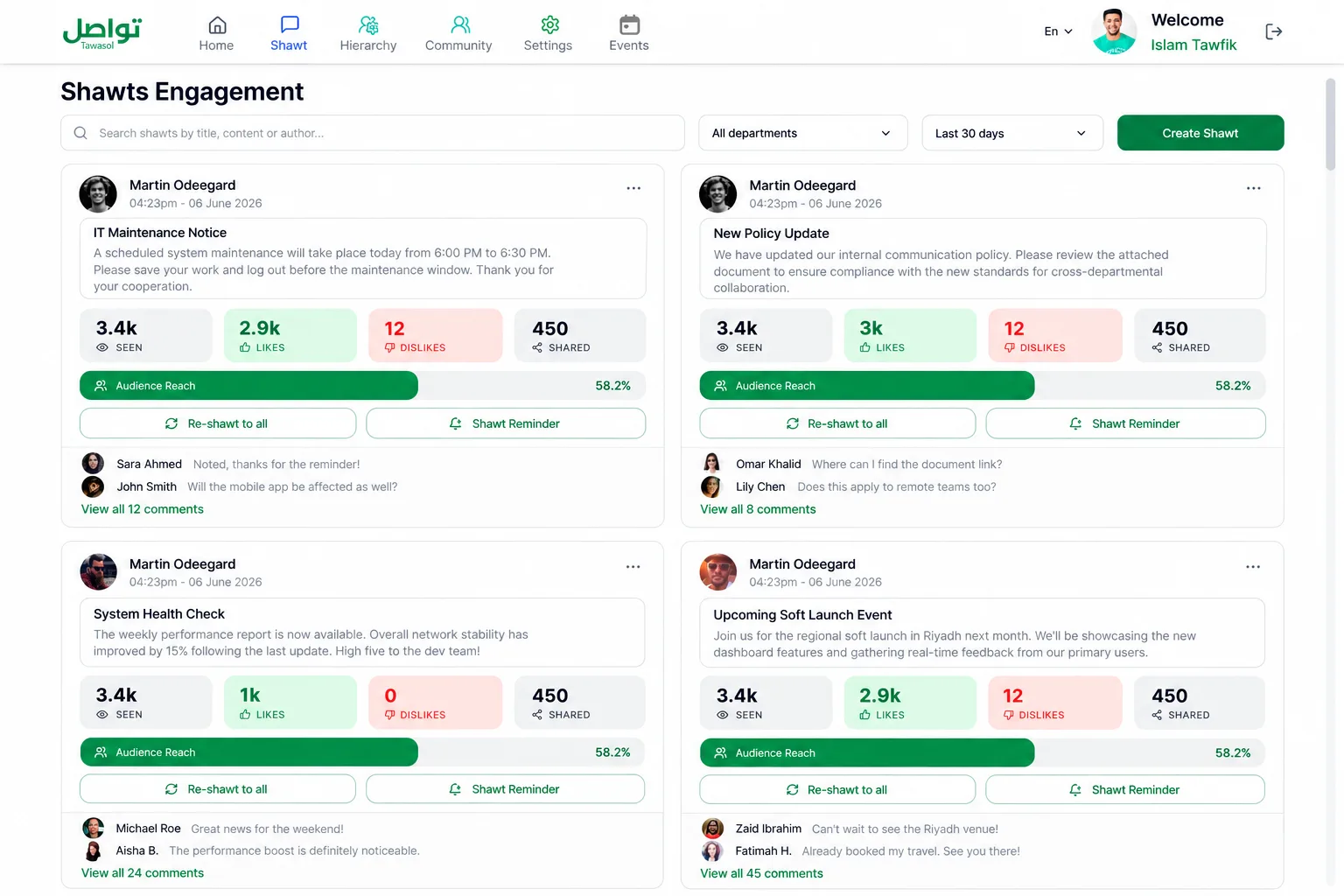
| Alarm Fatigue | Shawts route exclusively to the designated ward or clinical unit, delivering push notifications in seconds with room numbers and patient requirements. | Only the required care team is interrupted; other wards continue patient care without disruption. |
|---|
| Protocols Miss Shifts | The revised clinical SOP sits in the central Library, while a Shawt distributes it to every clinical unit across the department regardless of shift. | Every shift works from the identical, verified clinical protocol. |
|---|
| Unrecorded Coordination | Direct and group messaging takes place inside the hospital’s secure, centrally archived platform. | Consultations and operational handovers leave a permanent, retrievable written record. |
|---|
| Excluded Teams | Non-clinical support departments have their own units and role groups, accessed directly from mobile devices. | Critical facilities and transport notices reach the support staff who need them. |
|---|
03
Case Studies in Practice
01↗
Scenario A: Targeted Ward Crisis Alert
- The Role
- Night-Shift Nursing Supervisor.
- The Situation
- An acute pediatric decompensation in an isolation suite requires immediate specialized support.
- The Action
- She dispatches an urgent alert strictly to the pediatric response team group, detailing the room number and clinical state.
- The Outcome
- The alert hits only the designated team's devices within seconds. Clinicians confirm receipt as they move, allowing the supervisor to see who is responding before she reaches the room and determine whether to call external backup.
02↗
Scenario B: Clinical Pathway Revision and Shift Cover
- The Role
- Head of Critical Care Medicine.
- The Situation
- A revised sepsis management pathway is approved, and two weekend ICU shifts require immediate nursing cover.
- The Action
- The protocol uploads to the Library, and a Shawt deploys it to all ICU clinical staff with the document attached. Separately, the cover request posts to the qualified ICU nurse group.
- The Outcome
- Off-duty staff outside the qualified ICU group are not disturbed. The open shifts are filled inside the group thread, and clinicians access the updated clinical pathway on their phones during patient rounds.
04
Comprehensive Sector Capabilities
- 01
Cross-Department Clinical Coordination: Pharmacy, radiology, and nursing wards coordinate patient logistics in shared groups without opening private unit channels.
- 02
Permanent Digital Clinical Library: Training modules, clinical pathways, and demonstration videos remain accessible in the Library for rotating interns and new hires.
- 03
Continuing Medical Education (CME): Academic departments publish in-service training under Events; staff register and track attendance through the app.
- 04
Facilities and Biomedical Work Orders: Ward staff log broken monitors or plumbing issues via Ticketing, sending requests straight to the engineering duty desk.
- 05
Guaranteed Clinical Privacy: Screen-capture blocking, dynamic user watermarking, and view-only permissions ensure patient rosters and hospital documents never leak.
05
Measurable Value
- ↗
Day-to-day: Critical clinical alerts reach the right clinicians in seconds, and every nursing shift works from verified, current protocols.
- ↗
Over time: Clinical communication moves off unregulated chat apps into a hospital-governed platform, building a permanent, multi-year record of training and clinical procedures.
06
Frequently Asked Questions
Can an emergency notice be delivered to a single ward without alerting the whole facility?
Yes. Every Shawt targets specific units, functional groups, or named staff, ensuring only the intended audience receives the alert.
Can Tawasol deploy on private hospital servers?
Yes. Tawasol runs on-premise within the hospital's private data center, keeping health system data within its own firewall.
Can non-clinical staff (cleaners, porters, security) use Tawasol without a hospital email?
Yes. Support workers log into the mobile app using their existing Employee Badge ID or National ID.
How are hospital SOPs and patient rosters protected?
Files can be locked to view-only, mobile screenshots and screen recordings are blocked, and documents carry dynamic user-specific watermarks. Data remains encrypted at rest and in transit.
Does Tawasol integrate with Active Directory?
Yes. Hospital IT manages staff identities, clinical roles, and departmental permissions centrally via Active Directory.