
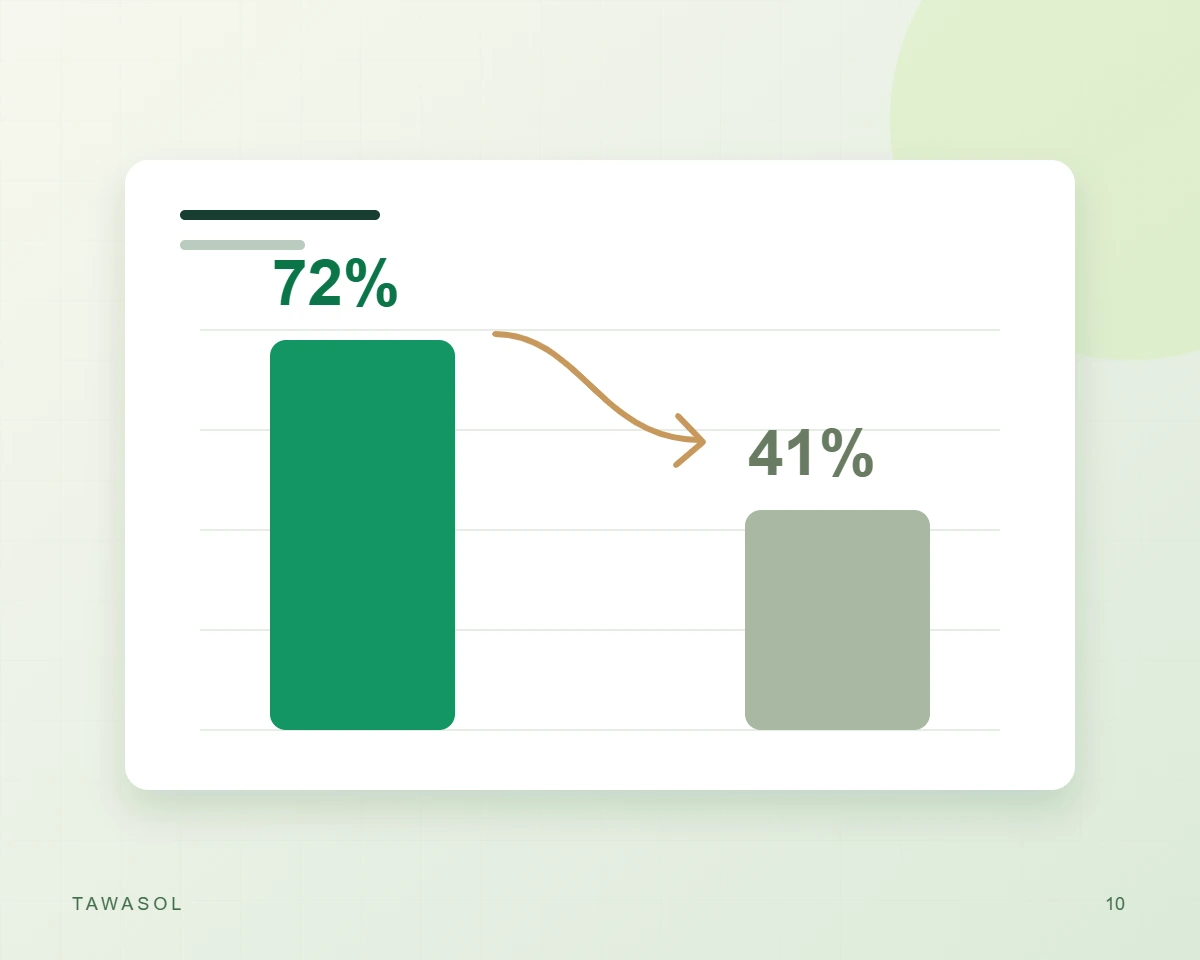
Six hundred employees answered the engagement survey. Two of their three biggest complaints were fixed by July, and work on the third was under way by September. A year later, most of them still believed nobody had listened.
“What’s the point? Nothing ever changes.”
The comment appeared more than thirty times, in different wordings, in this year’s engagement survey. The response rate had fallen from seventy-two percent to forty-one.
Rania’s team went back through the previous year to find out why.
Last March’s survey had been the best in four years. People wrote long, honest comments, and the three loudest themes were clear. The canteen closed before the night shift’s break, the air conditioning in the third branch had been broken since summer, and nobody understood how promotions were decided.
The results went to the executive committee in May, and action followed. The air conditioning was repaired in June. The canteen hours were extended in July. A promotion criteria document was drafted in September and shared with managers.
Many of the people writing “nothing ever changes” had eaten in a canteen that now stayed open for them, or worked in a branch that was finally cool. Hardly any of them connected it to the survey.
01Why does trust fall after a survey?
From the inside, the year looked like a success. Issues were raised, priorities were set, two problems were fixed within two months of the results, and work began on the third. Most organisations would be proud of that.
From the floor, it looked completely different. People answered honest questions in March, then heard nothing. A few months later, some things improved, and nobody said why.
Without an explanation, a fix reads as routine maintenance, a lucky budget decision, or something that was going to happen anyway. The survey only earns credit for the changes people know it caused.
02Change people weren’t told about doesn’t count
This step is easy to underestimate. The night shift needed the longer canteen hours. They also needed to know that their answers in March had produced them.
That second part costs almost nothing, and almost everyone skips it. The facilities team fixed the air conditioning. The operations team changed the canteen hours. Each did its job well. Nobody’s job was to go back to the people who raised the issue and say: you told us, and this is what we did.
So the strongest evidence that the survey works, two visible fixes, never reached the people who would take next year’s survey.
Gallup’s research on what to do with employee survey results points the same way. Workgroups that most strongly agreed their action plans had made a positive difference raised their engagement scores by an average of 10%. Those at the bottom saw their scores fall by 3%. Taking action counted, and so did people seeing that it had.
03Twelve months is too long between questions
There’s a second gap. An annual survey asks people about the previous twelve months, and the results reach decision-makers weeks after it closes.
By the time the canteen hours changed in July, nobody had asked whether the new hours actually worked. They may have. The night shift’s break may also have moved by then. The next chance to find out was the following March.
The annual survey has its place, and it’s good at showing the big picture. It’s poor at telling you whether a specific fix landed with the specific people it was meant for.
04What does closing the loop look like?
In internal communication, closing the loop means telling people what changed, in a place where they’ll actually read it.
In Tawasol, you can publish an announcement to the exact units and groups that raised an issue. The canteen update goes to the night shift across every site it affects: we heard you in the survey, the canteen now stays open until your break ends, and this is when it starts.
The dashboard then shows views broken down by unit and group, with a list of who viewed it. If one site’s night shift sits well behind the others, you know which supervisor to call before the change goes unnoticed there.
The comments do something the survey can’t. When someone replies that the new hours work on weekdays but not on Fridays, you hear it in the first week instead of waiting until next March.
05Ask the small question while it still matters
Between annual surveys, short and specific questions do most of the useful work.
In the Community section of the app, you can post a vote with options, and the results appear live alongside a countdown timer. Two weeks after the canteen change, ask one question: night shift, are the new hours working for your break? Community is open to everyone, so say who you’re asking in the question itself, and read the replies alongside the totals. Leave it open for two days, and you have an answer the same week.
A note on judgement here. For sensitive topics, like how people feel about their manager or whether they’re thinking of leaving, keep your confidential survey. A vote in the Community feed suits practical questions people are comfortable answering openly. Used that way, it complements the annual survey.
06Say what you won’t do, too
Closing the loop also covers the answers that take longer.
The third theme from March, promotions, was harder. A criteria document was drafted, but the full review would take another year. Most organisations stay quiet in that situation, hoping to announce something complete later.
People read that silence the same way every time: they ignored it. A short, honest update works better. We heard that promotion decisions feel unclear. Here is the draft criteria document, shared with your managers this month. A full review follows next year, and this is when we’ll update you again.
People can accept a slow answer. What damages trust is no answer at all.
07Don’t tidy away the uncomfortable replies
Once you open comments on survey follow-ups, some replies will be critical. Some people will say the fix came too late, or that it missed the point.
Those replies are the most useful thing on the dashboard that week. Tawasol’s moderation tools exist to remove what is abusive, insulting or unlawful, and criticism belongs in none of those categories. The first time a fair complaint disappears, people stop writing honestly, and you’re back to guessing. We went deeper into that line in Five Announcements, Zero Comments, and You Called It Alignment.
08The same year, told properly
In June, the third branch receives an announcement: you raised the air conditioning in March, and it was repaired this week.
In July, the night shift at every site receives the canteen update, with the survey named as the reason. The dashboard shows one site lagging, and its supervisor walks the team through it at the next shift.
Two weeks later, a one-question vote asks whether the new hours work. Most say yes. Several say Fridays are still a problem, and the Friday hours change in August.
In September, everyone receives a short update on promotions: the draft criteria, what happens next and when.
The following March, the survey goes out again. People remember answering last year, and they remember what happened after. The response rate holds. The comments are about new problems, which is exactly what you want from a survey, because it means the old ones were dealt with.
- survey (March)
- executive committee
- 2 unannounced fixes + 1 unannounced draft
- response rate falls to 41%.
- survey
- targeted update for each fix
- one-question vote
- Friday adjustment
- response rate holds.
09The survey you’ll run next
Your next engagement survey is probably already on someone’s calendar. The questions matter less than you think. What decides the response rate is whether people believe last year’s answers went anywhere.
That belief gets built in the months between surveys, one visible response at a time.
Before the next one goes out, bring us your last survey’s main themes and the actions taken since. Together we’ll trace which teams raised each issue, how the response would reach them, and the short follow-up questions that would tell you whether each fix worked.
Plan your survey follow-up with us ↗Tawasol. Your team, connected.
Frequently asked questions
What is employee engagement survey follow-up?
It’s the internal communication that happens after the results: telling teams what was done about each issue they raised, and checking whether each fix worked.
Why do survey response rates fall after a good year?
Employees don’t link the improvements to the survey, so they conclude nothing changed.
What does closing the loop on a survey mean?
Telling the people who raised an issue what was done about it, in a place they will read, including the answers that take longer.
Can quick polls replace the annual survey?
No. Polls suit practical questions between surveys, and sensitive topics should stay in a confidential survey.