
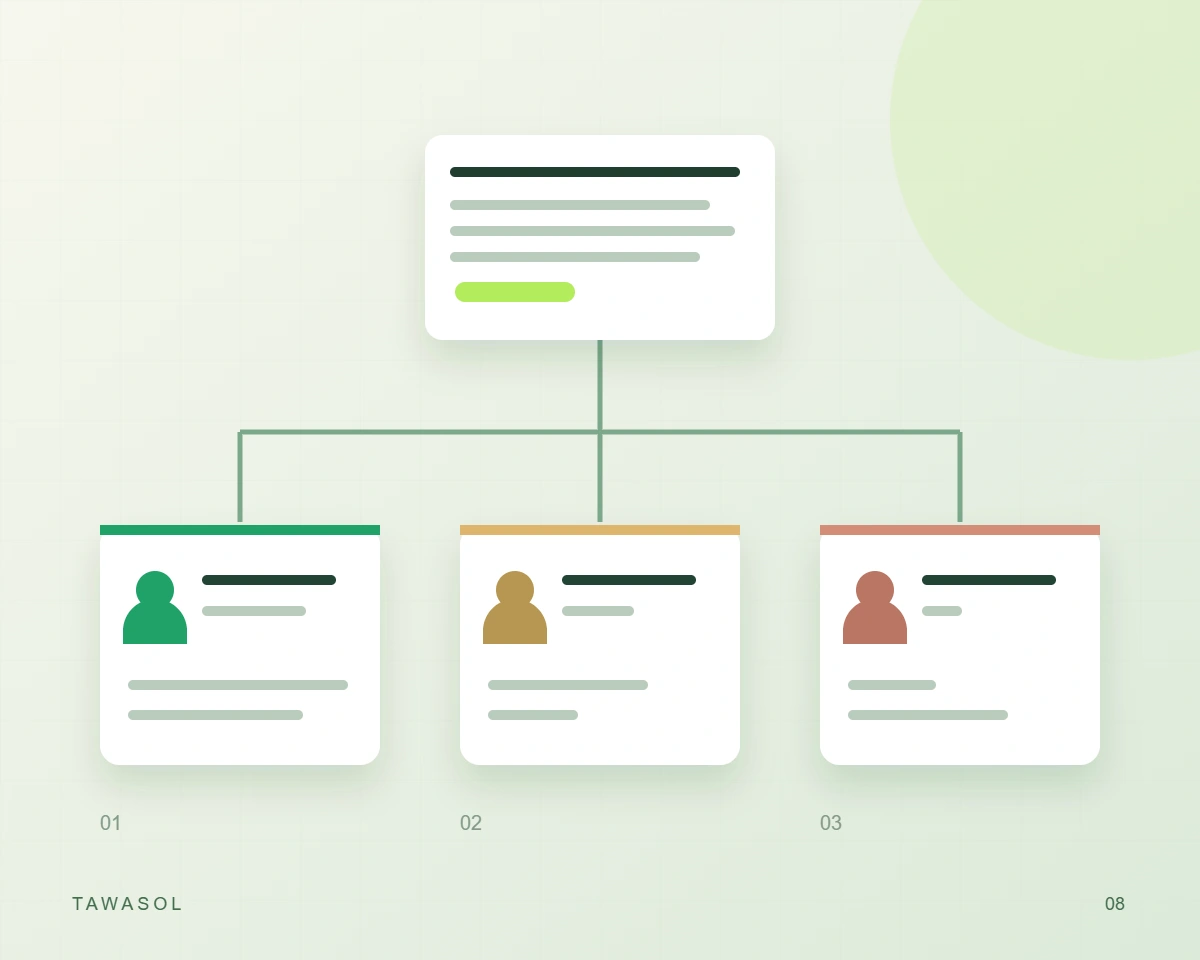
On Thursday the decision was one paragraph. By Monday, three teams were working to three different versions of it, and every manager believed they had passed it on correctly.
On Thursday afternoon, HR sent the email to fourteen managers.
It was one paragraph long. From the first of the month, overtime would need approval from the department head before it was worked, instead of from the line manager afterwards. Please brief your teams before Monday.
It was clear and short, exactly the kind of message nobody expects to go wrong.
Hossam read it aloud at Sunday’s morning huddle, word for word. His team understood it.
Mona was between two client calls. She typed a line into her team’s group: “Overtime needs approval now, more details soon.” The details never came, and her team assumed approval still meant asking her.
Karim was on leave until Tuesday. His team heard about the change in the canteen, from someone in another department, and concluded overtime had been stopped altogether.
By the end of the month, payroll had rejected thirty-seven hours of claims from one team. A second team had missed a shipment because nobody would stay late. And all fourteen managers, asked whether they had briefed their people, would have said yes.
01Why do cascaded messages change?
In internal communication, a cascade looks like distribution. In practice, it’s translation, done fourteen times by fourteen people under fourteen different kinds of pressure.
Each manager decides what matters, what can wait and what the team will care about. Most of them decide well. But your employees act on the version their manager had time to repeat, and that can be quite different from the one you wrote.
Nobody did anything wrong in that story. Hossam was diligent, Mona was busy, and Karim was on approved leave. The process simply assumed that fourteen people would deliver the same paragraph in the same week, in the same words, and nothing checked whether they did.
02Your managers are already carrying too much
This keeps happening for a reason, and careless managers have little to do with it.
According to Gallup’s State of the Global Workplace 2026 report, manager engagement had its largest annual fall between 2024 and 2025, dropping five points from 27% to 22%.
The people you rely on to carry every policy, change and decision are the group whose energy is falling fastest. Every message routed through them adds one more task to a day already full of targets, rosters and problems that won’t wait.
When a cascade fails, the usual fix is a reminder: please make sure your teams are briefed. That adds pressure to the exact point that is already giving way.
03What cascading internal communication can’t tell you
Look at what HR actually knew on Monday morning. The email went to fourteen people, and it was delivered fourteen times.
Now look at what HR didn’t know. Two hundred and twelve people sat behind those fourteen managers. Which of them had heard the change? Which version had they heard? Who was still waiting for details that were never coming?
A cascade only gives you a record of the first step. Everything after that happens in huddles, corridors and private groups, and none of it comes back to you until it shows up as a payroll rejection or a missed shipment.
04Send once, to everyone it concerns
Managers should stay in the conversation. They just shouldn’t be the only route the message travels.
In Tawasol, you build the organisational structure once. Nested units mirror your reporting hierarchy, and cross-functional groups cover teams that don’t follow the reporting line. When you publish an announcement, you choose at least one unit and can narrow it to groups or named individuals.
So the overtime change goes directly to the three operational units it affects. Every employee in those units gets the same paragraph, in the same words, at the same moment, and so do their managers.
That small change shifts the manager’s role. They stop being the relay and become the person who explains what the change means for this team, on this shift, with this workload. Only a manager can do that part, and it’s the part that gets squeezed out when they’re busy retyping the message itself.
05Brief the managers first
Managers raise a fair objection here. Managers don’t want to hear about a change at the same moment as their team, with no time to prepare an answer.
They shouldn’t have to. Create a group for the managers concerned and publish to them first, a day or two ahead, with the reasoning and the likely questions. Then publish to the units.
The managers walk into the huddle already knowing what the team will read, and ready to talk about it. The team gets the official wording from the source and the context from the person who knows their work. Each version does its own job.
06See where it landed
Direct publishing solves the version problem, and the dashboard solves the visibility problem.
For each announcement, Tawasol reports views, likes, dislikes, comments and shares, broken down across total members, units and groups. Open the views and you see who viewed it, with each person shown alongside their unit or group.
Picture the Sunday after the announcement. Two units have read almost completely. The third sits at fifty-eight percent. You don’t need to guess why: that’s Karim’s unit, and Karim is on leave. One message to his deputy that morning closes a gap that would otherwise last until payroll finds it.
Comments do similar work. When four people in one unit ask whether small amounts of overtime still need approval, you’ve found the sentence that was unclear. Answer it once, in the comments, where everyone in the unit reads the same answer. We covered how to read those numbers in Five Announcements, Zero Comments, and You Called It Alignment.
07What the manager’s time is for
When the announcement carries itself, the morning huddle stops being a reading session.
It becomes the place where a supervisor says: this means the Thursday late shift needs approval by Wednesday noon, so plan for it. Or where someone raises the problem nobody at head office could see, like a department head who is rarely on site to approve anything.
That conversation is what makes a policy work. Cascades rarely leave room for it, because all the manager’s attention went into getting the message out.
08Replay Thursday
Same decision. Same fourteen managers.
On Wednesday, the managers’ group receives the change with a short note on why it’s happening and what teams are likely to ask. Mona reads it between calls and gets the whole picture.
On Thursday, the announcement goes to the three affected units. Hossam’s team reads it before the huddle. Mona’s team reads the exact wording, so nobody assumes approval still means asking her. Karim’s team reads it too, even though Karim is away.
On Sunday, the dashboard shows Karim’s unit lagging. His deputy raises it at the huddle that morning. Two questions come in through the comments, and the answers sit under the announcement for anyone who wonders the same thing later.
At month end, payroll processes every claim, and nobody misses a shipment. When HR is asked whether the change was communicated, it can show a list of who read it, unit by unit.
- HR
- 14 managers
- 3 versions (read aloud · one-line message · canteen rumour)
- 37 rejected hours.
- HR
- managers’ group (Wednesday)
- 3 units (Thursday)
- dashboard flags Karim’s unit (Sunday)
- deputy closes the gap.
09The next decision you’ll cascade
Somewhere in your organisation, a decision is being finalised that will reach most of your people through their managers. It will be clear when it leaves your desk. The question is how many versions of it will exist by the time it reaches the floor.
Managers are the most valuable people in that chain, and right now they’re being used as a delivery mechanism.
Send us the last ten organisational announcements you issued: the text, who each was targeted at, and how you measured the effect, if you measured it. We’ll return them as a written Internal Communication Measurement Framework. It covers what should have been measured for each announcement, which indicators deserve a place in your quarterly report, and how to see which teams actually received the message, beyond the managers who passed it on. You get a working document you can use as it stands. Send it to contactus@tawasolapp.com with “Internal Communication Measurement Framework” in the subject line.
Tawasol. Your team, connected.
Send your announcementsFrequently asked questions
What is cascading communication in internal communication?
It’s the practice of sending an announcement to managers, who then pass it on to their teams. It relies on each manager repeating the message accurately, and it records only the first step.
Why do cascaded messages get distorted?
Each manager retells the message under different pressure and decides what to keep, so teams end up acting on different versions.
Should managers still be part of announcements?
Yes, as the people who explain what a change means for their team. Brief them a day or two before the announcement goes out.
How can HR check whether a cascade worked?
Ask three people from three teams to explain the change in one sentence, then compare the answers.